Choosing the Correct Gemstone for Your Project. What Gemstones are. Gemstones are wonderful. They come in all different shapes and sizes. Gemstones are beautiful because they can be used in all different types of pieces of jewellery.
If you are just getting started with jewellery making or maybe just looking for some new ideas. You need to know how to choose the perfect gemstone for your project. This will help you decide which gemstone would be the best gemstone for your project. There are a few things to take into account before you get started. You will need to think about the colour. And also how well it goes with the design. Also. There is a few things that you need to consider when you first start out. If you do not have much knowledge on gemstones.
Types of Gemstones There are two types of gemstones. There are the precious stones and the semi precious stones. The precious stones tend to be. Diamonds. Rubies. Sapphires. And Emeralds. These gemstones can last for a long period of time.
This is because they are found deep down in the Earth and takes millions of years to form. There are other stones that are classed as semi precious stones. Such as amethyst. Topaz. Tourmaline and turquoise. You do not have to just buy real natural gemstones if you feel a stone is to expensive. There is also synthetic gemstones and also imitation gemstones. Synthetic gemstones are not real. They are made in a lab. But they do have all the same properties.
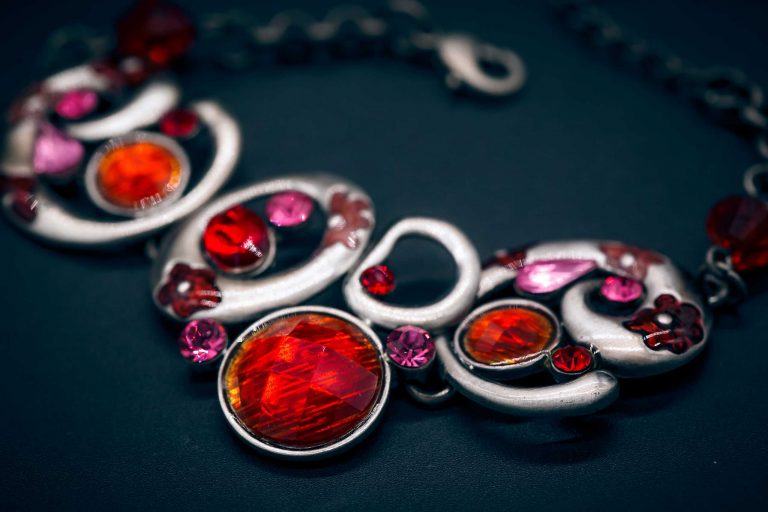
Gemstone colour Gemstone colour is the first thing we notice on a gemstone. You can find a colour of gemstone that can suit everyone’s personal preference. You do have to take into consideration what colour of gemstone you are buying. As well as the shades of the gemstone that are available to choose from. There is a colour wheel.
It helps you to work out what colours go together. As well as the best ones for different types of gemstones. There is many different shades of colour such as blue. Green and Red. They can have different shades like dark green. Dark blue or light blue. Dark red and light red. It depends on what your piece is meant to look like. Is it meant to be bold with bright colours.
Or does it need to be more delicate with lighter more subtle colours. You also need to take into account what metal that you plan to work with. There are different gemstone colours that tend to be used with different metals. Gold gemstones are quite popular. As well as silver and platinum. But if you are using different colours. You have to make sure you choose a complementary colour scheme. Or an analogous colour scheme.
Gemstone hardness and durability You will need to take into account the gemstones hardness before you start your piece. Gemstone hardness can be measured with the Mohs scale. The hardness of gemstones will determine if you should use this gemstone for daily wear.
Or for a special occasion. Diamond gemstones are very hard. So is sapphire and ruby. They tend to be used for rings which is worn daily. Opal and turquoise are softer stones and are not used for daily wear. There may be a couple of stones you have in mind but you are not sure if they are durable enough. Then you will need to check the durability or gemstones. Some stones will react to light. Heat and chemicals and some stones are harder to clean than others.
Gemstone shape and cut The shape of gemstones will be determined by the cut. It depends what type of cut your stone has. It will change the shape of your stone. And also the cut of a stone will change the way a stone interacts with light. Typical shapes include round, oval, square, pear and marquise, each with a distinct look. The cut, or facet arrangement, is what shapes and faceted a stone. A stone with a good cut allows the light to bounce around the facets and gives the stone its brilliance and flash.
A stone with a poor cut could look quite dead, even if the stone were perfectly clear and had the most intense color imaginable. In addition, consider how the shape and cut of the stone fits the design. A large faceted stone will make a nice focal point; a small, simple cut may work better as an accent. The choice of a setting can also emphasize or downplay the shape. When selecting a setting, keep in mind that while it should complement the stone, it should also be secure and have good balance and proportion. Size and Proportion Gemstones come in all shapes and sizes. Make sure they fit the design and don’t overwhelm it.
A stone that’s too big will dominate a design; one that’s too small may not have the desired impact. Keep in mind, too, that the stone must also work in concert with the other components of the design, such as the metal, chain or other stones. In addition, consider how it’s intended to be worn. A big stone could work in a pendant, for example, but may be too large for a ring. Consider also the weight of the stone. Heavy stones are going to require a stronger setting and may be uncomfortable for a wearer, especially in earrings or a pendant. Matching Stones to the Intended Design The gemstone must mesh with your design.
Consider what the design is trying to say. Is it a strong, bold design or an understated, subtle one? Is it for everyday wear or for dress occasions? In a modern design, a stone with a clean shape, or a very minimal design stone, would fit better. An intricate or classic design could look very beautiful with a colorful or unique shaped gemstone. Consider, too, whether the stone is meant to express some symbolic message. There are many gems and gem meanings you may want to incorporate into a design; a gemstone with a strong or special meaning can make a piece that much more appealing. Budget
The price of gemstones varies widely based on a number of factors: rarity, quality, size, and so forth. Set your budget before you select a gemstone. That will help narrow your search to what’s affordable to you. Keep in mind, you don’t always have to use an expensive gemstone. You may want to choose a cheaper variety of gemstone; use several small stones to create an effect; or use a synthetic stone instead. In addition, if you have to limit your budget, you might decide to mix more expensive stones with cheaper ones to create a beautiful design on a budget. Remember, too, that you don’t always need an expensive piece to make a great piece. It all comes down to design and skill. Caring for Your Gemstones Your gemstone will require some care to keep it beautiful and intact. Some gemstones are tougher than others; some can be easily damaged with certain cleaners. You need to research how you should care for your specific gemstone. You don’t necessarily want to clean all gemstones the same. You may want to use mild soap and water, or you may not want to get it wet at all. Also, consider exposing some gemstones to certain chemicals, temperatures, or sunlight before you do; you need to know whether they are able to withstand those conditions. Storing your piece of jewelry is one of the best ways to protect it from being damaged in the first place; be sure to store pieces safely and separately.